





Your RV is winterized, the tanks are drained and the antifreeze is in. One question still comes up every fall: where will it spend the winter? In the driveway? On a lot? Under a shelter? In a warehouse at your dealership? Each option has its advantages, its limits and its price… And the right choice depends as much on your RV as on your budget and the region you live in.
Why storage location matters
An RV stored for five or six months faces several enemies, and the location you choose determines which ones it will have to fight:
- Snow and ice: their weight on the roof and freeze-thaw cycles wear out seals and caulking.
- Humidity: condensation encourages mould inside.
- Sun and wind: even in winter, UV rays damage fiberglass, awnings and tires.
- Rodents: a parked RV is the perfect shelter for mice and other rodents.
- Theft and vandalism: an RV left unattended for several months is an easy target.
No option protects you against absolutely everything. The goal is to choose the one that suits you best and reduces the risks that matter most to you.
Your storage options
At home
It’s the most affordable and most convenient option: your RV is safe where you can see it, and you can access it whenever you want. But you need the space, and your municipality has to allow it: many bylaws restrict RV parking in driveways. Beyond the space it takes up, you also have to think about snow clearing, which inevitably gets more complicated with an RV in the way.
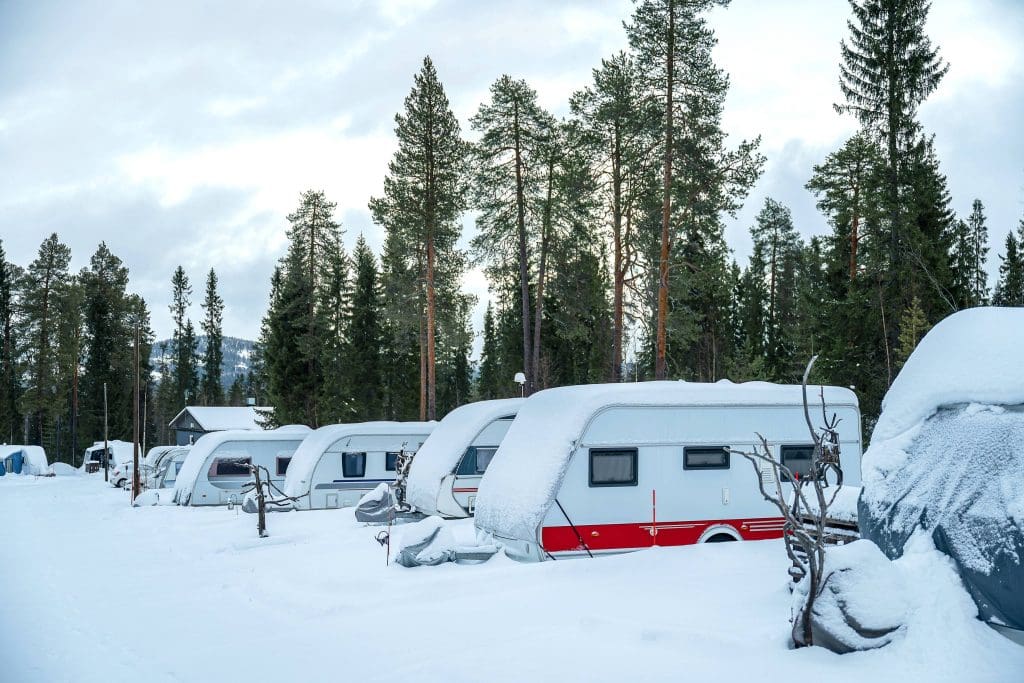
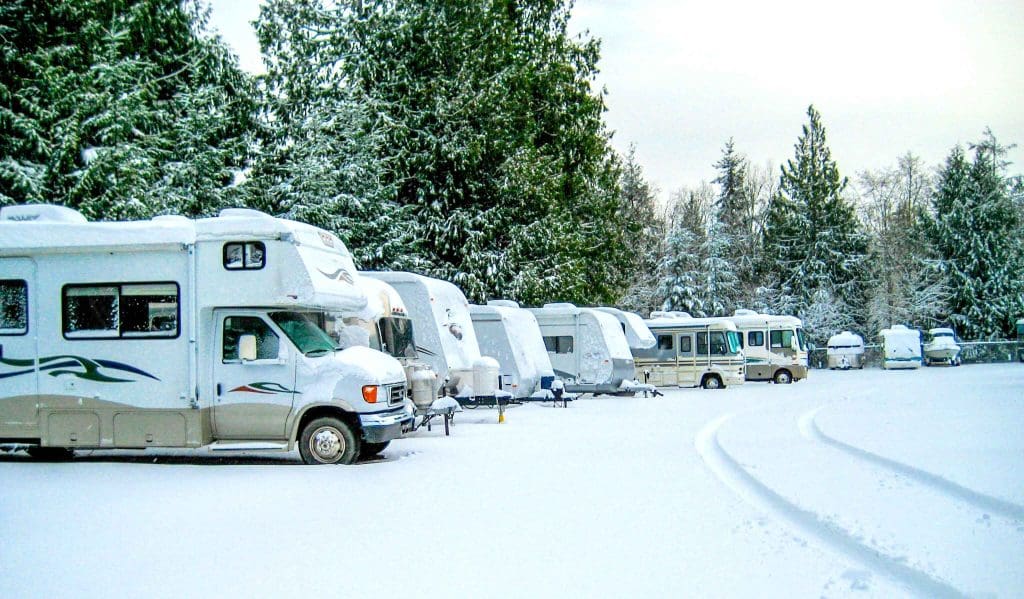
Outdoors, on a storage lot
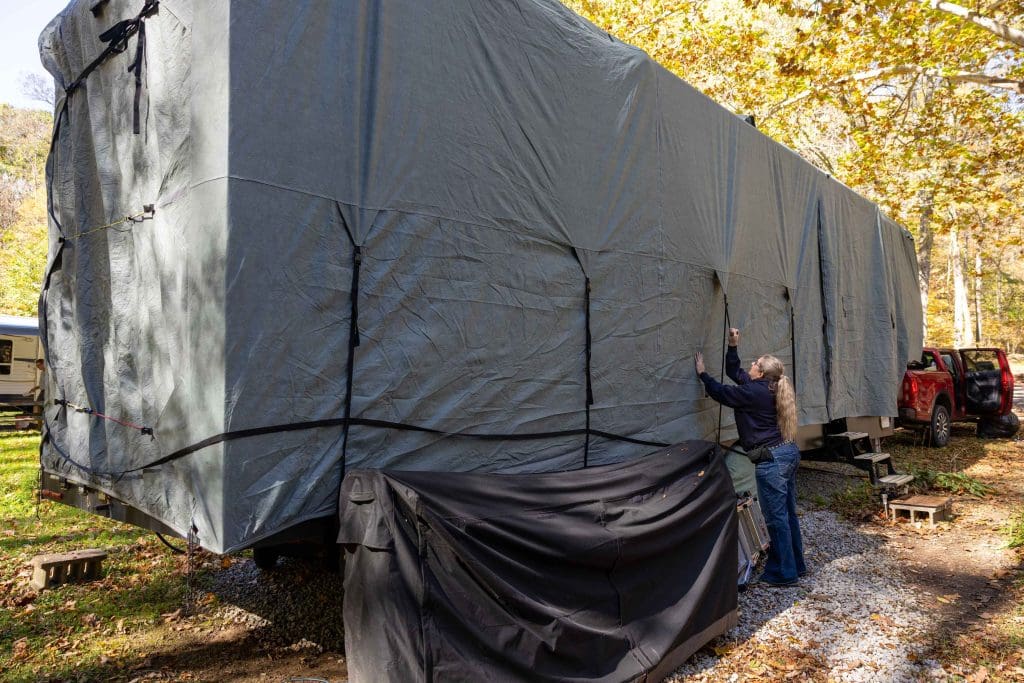
A fenced lot dedicated to RVs is often the most affordable solution away from home. The RV is still exposed to snow, sun and wind, though. A quality cover, designed for RVs and breathable, is then essential to give the best protection against humidity and UV.
Outdoors, under a shelter
A shelter or carport protects the roof from snow and sun while costing less than a closed warehouse. It’s a good compromise, especially in regions that get a lot of snow. The sides remain exposed to wind and humidity, however, and it’s not always the most economical option.
Indoors
A closed warehouse offers the best protection against the elements, UV and theft. But it’s also the most expensive option, and spots fill up fast in the fall. A heated warehouse also limits temperature swings and humidity: a real plus worth considering for owners of high-end or newer RVs.
At your dealership
Depending on availability, some RV Care dealers store their customers’ RVs for the winter, most often outdoors on their lot. The advantage: your RV is in the hands of a team that knows it, and that can handle its maintenance or spring de-winterization without you having to move it. And if you’re buying a new unit right now, many dealers are offering free storage until spring.
How to choose
Three questions will help you decide:
- What’s your budget? From free (at home) to the most expensive (heated indoor), the gap can be significant.
- What RV do you have? A new or high-end RV deserves more protection than a trailer that’s several years old. A large motorhome or fifth wheel won’t fit in every warehouse: check the accepted height and length.
- Where do you live? In a region with heavy snowfall, protecting the roof becomes the priority. In a humid region, it’s ventilation and fighting mould.
Whichever option you choose, book early: spots get scarce as soon as the cold sets in.
Mistakes to avoid
A few easily avoidable mistakes come up every winter. The first: parking your RV under a tree, where branches broken by freezing rain and falling clumps of snow can damage the roof. The second: covering it with a simple plastic tarp, which traps moisture and encourages mould; choose a cover designed for RVs instead. The third: leaving it in a low spot on the lot, where water pools and then freezes around the tires. Finally, make sure your insurance covers your RV where it will spend the winter.
Before you close the door for winter
Location is only part of the equation: a well-prepared RV gets through winter much better, wherever it is. For the prep work, check out our guides How To Winterize your RV and 8 Helpful RV Winter Storage Tips.
And if you’re looking for a turnkey solution, your RV Care dealer can help. These services aren’t available everywhere: contact the dealer nearest you to find out what they offer.